About
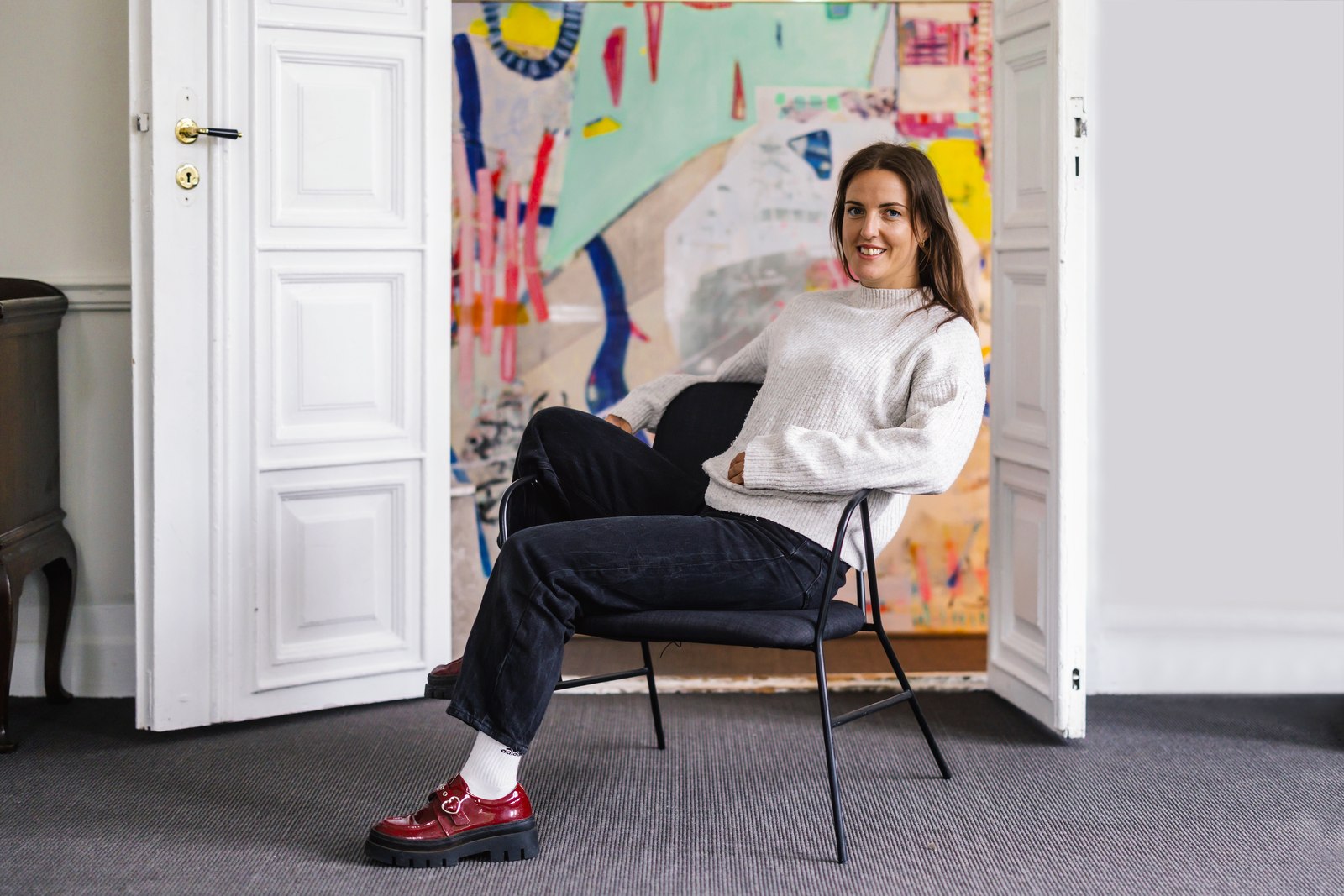
I'm always chasing play. It's part of who I am, even when I find myself in situations or phases of life that make it harder to reach.
For me art is a place where I can aim for just existing - a possibility to take part without having to be good at something first. Success is getting out what's inside me. I've learned that happens when I really manage to dive in and get lost for a while. Or not lost: finding pieces of me. Memories that surface unexpectedly, in random moments and details. I think at the base of what people call inspiration are memories. Often core memories, for me circling around my childhood and my mum, who died - which makes me rely on memories to reflect on my life with her.
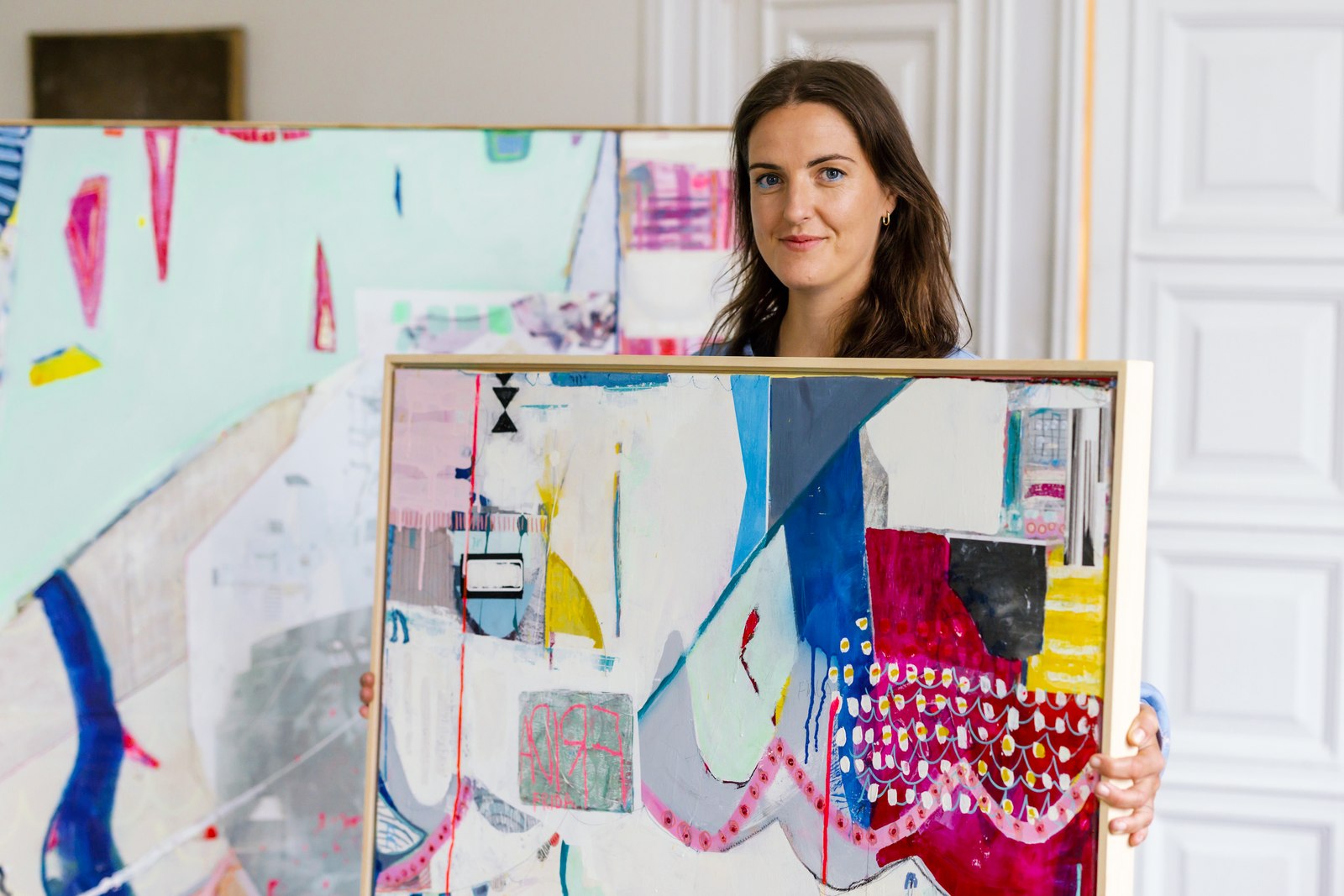
I paint to satisfy my own aesthetics, but creating a painting that I "like" is not trivial. Even though we like to think we know our preferences, discovering them is real work and a dynamic process. As adults, as parents, maybe especially as women, we can lose this ability. We spend so much time performing, optimizing and compromising for the people around us, including the ones we love.
The process
I really enjoy just doing whatever comes to mind. That is freedom. But it leaves me with situations on the canvas that have to be solved, and I enjoy that part just as much. It's where I draw analogies to my work as a data scientist - I love systems and systems thinking, creating patterns and matching them.
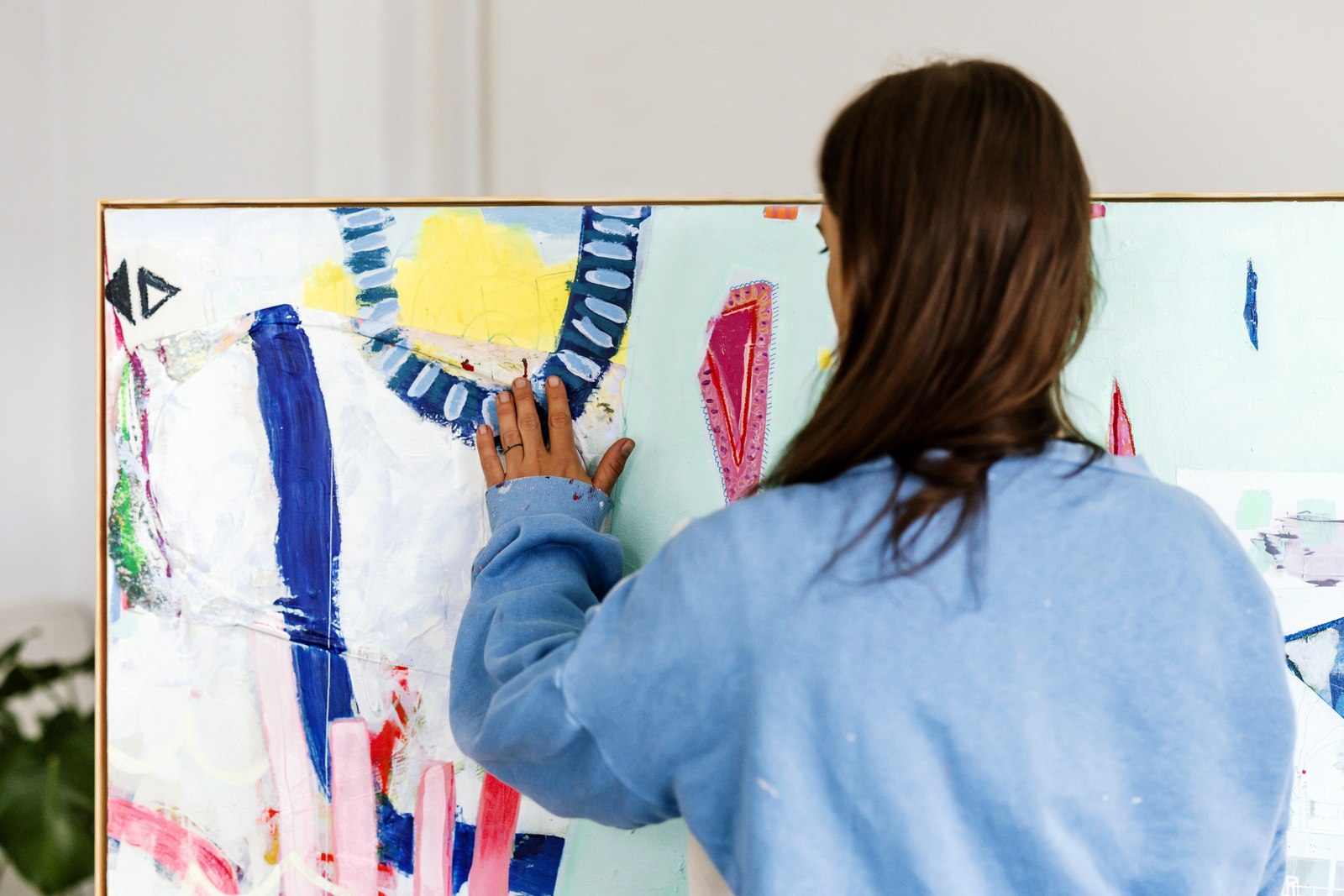
I engage with form as something relational. When creating shapes I often return to concepts I met at university, in classes like optimization theory and algorithms. I'm good at sensing structure on a flat surface, but I've always struggled with dimensions - especially imagining 3D space. Maybe that's why I paint: the canvas lets me work with space in a way that feels more intuitive.
My paintings always have many layers, which takes time, with necessary breaks for reflection in between. But the painting itself is fast. I want to do exactly what I feel in that moment - even mixing paint can interrupt the urgency of the gesture. Some small areas survive from the very beginning, and I leave them showing.
I get really excited by trying new things and I enjoy experimenting with different media. Currently I'm working in two processes: oil and cold wax on smaller wood panels, and acrylics on larger canvases. Switching between them keeps things novel.
On play
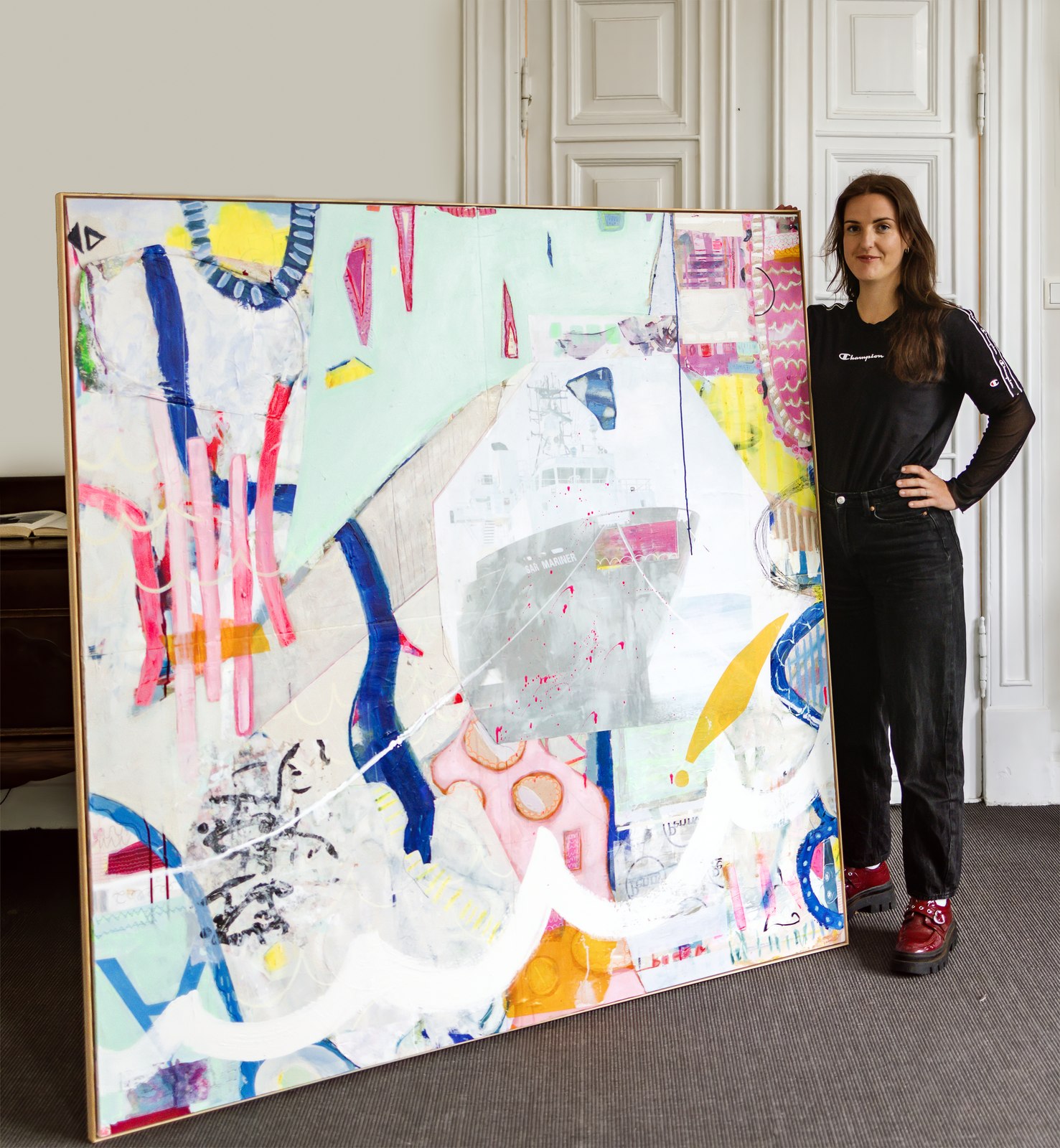
Play isn't often associated with femininity, and I like to mention this because femininity so often goes hand in hand with living up to a certain definition of it. Play doesn't work that way. It isn't about approval - it's self-directed and doesn't care how it's received. It's sad that stereotypically there is no intersection between the two.
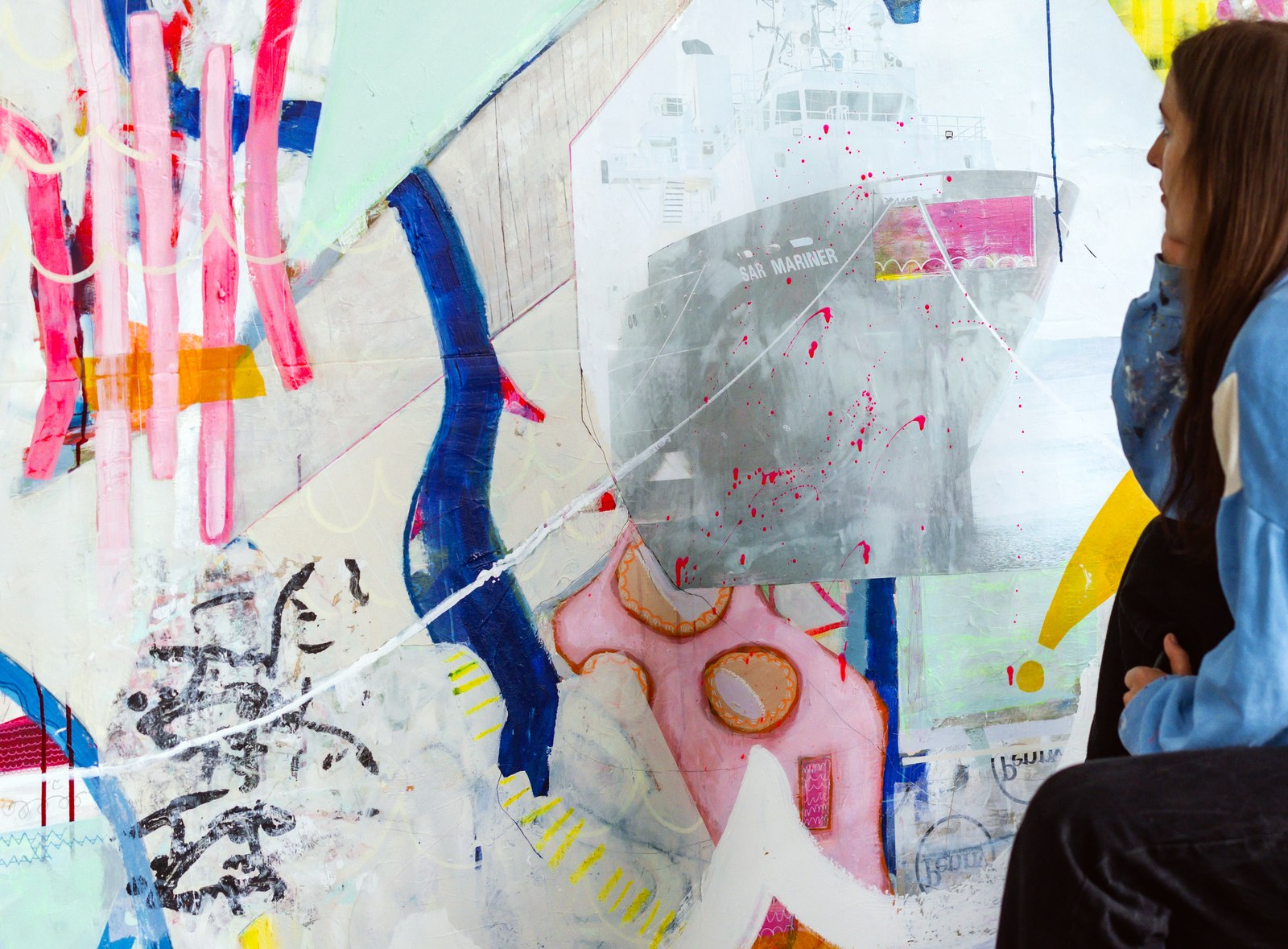
Water is a source of inspiration for me too. Oceans and lakes captivate me with their blues, greens, depth and mystery. I love the act of jumping into water, the weightlessness - imagine being under the surface with your whole body, looking up and seeing the sun rays coming through. It mirrors how I approach painting: I dive in without overthinking.
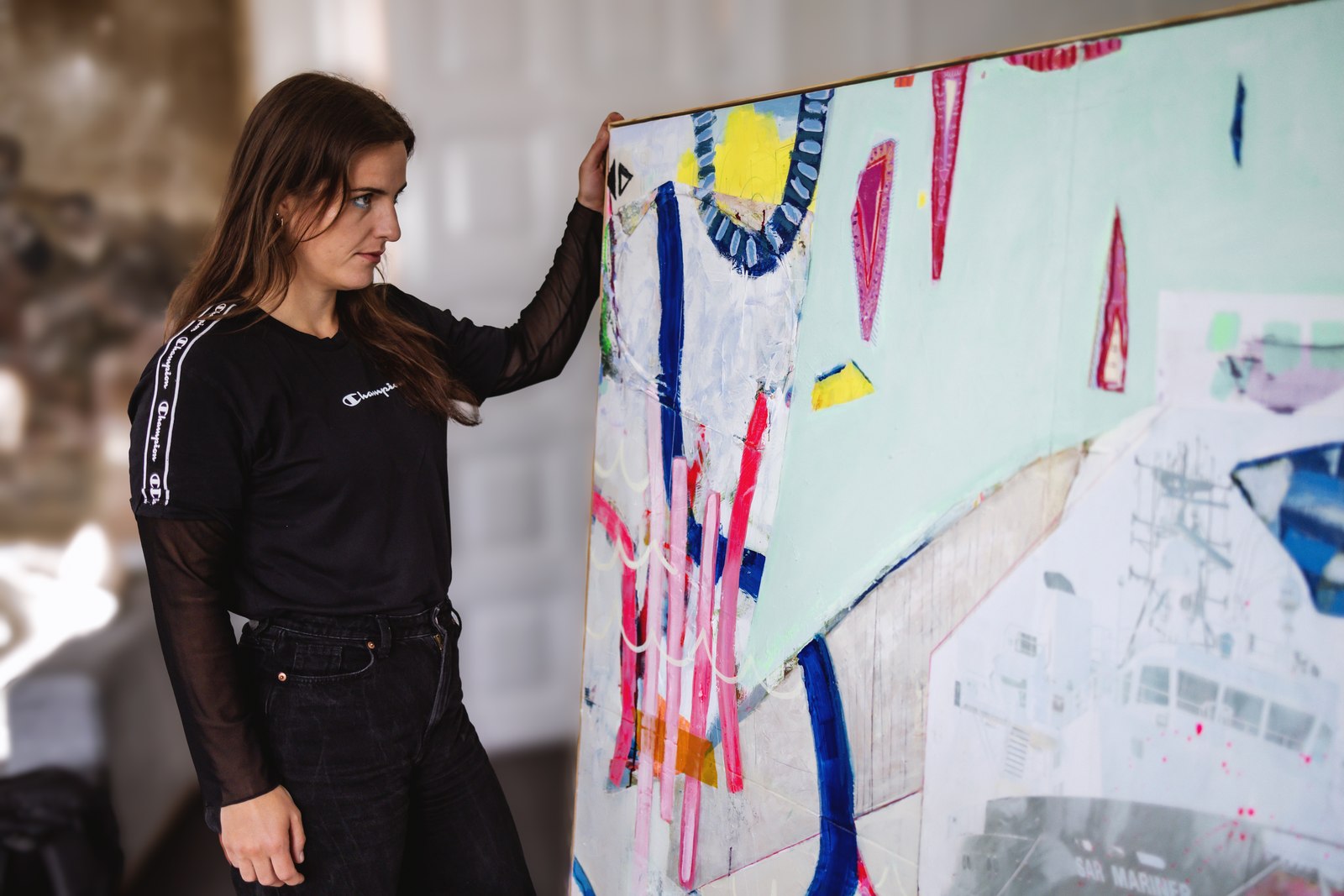
I never stopped playing. What I do is joyful and serious at the same time.
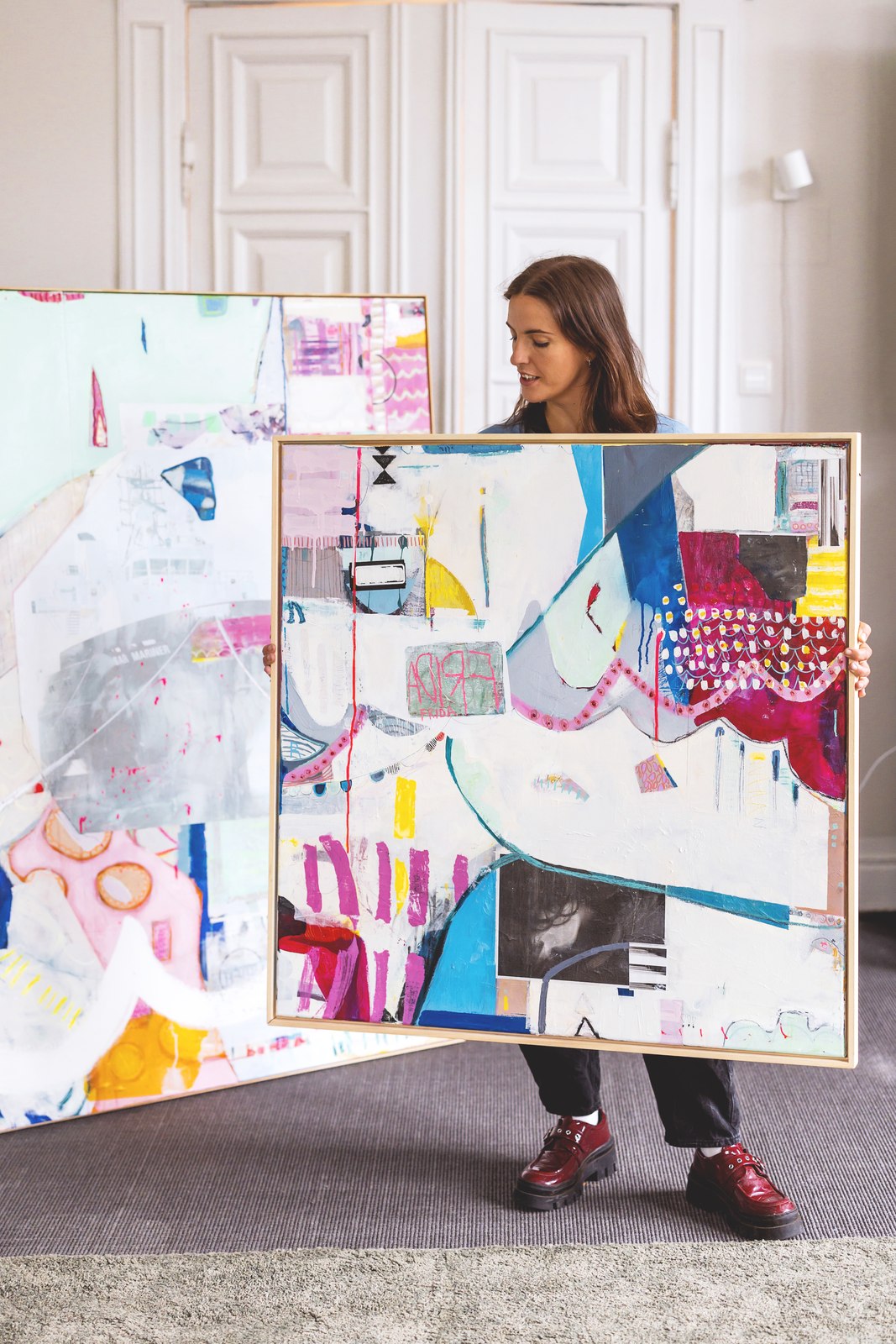
Biography
Fiona Dick is a painter based in Bergen, Norway. She lived in Berlin for ten years during her studies. She is self-taught as a painter and has been enrolled in art courses since 2021. Alongside her studio practice she works as a data scientist.
Selected exhibitions & press
- 2025HOW SHE PLAYS, solo exhibition, Galleri Oker, Nesttun
- 2025Atelier Juni, Bergen (group)
- 2025Fanaposten, feature: "Mine malerier har mye til felles med matematikk"
- 2024Galleri 52, Bergen - guest exhibitor, Minner i ruter
- 2021-Art courses with Pamela Caughey