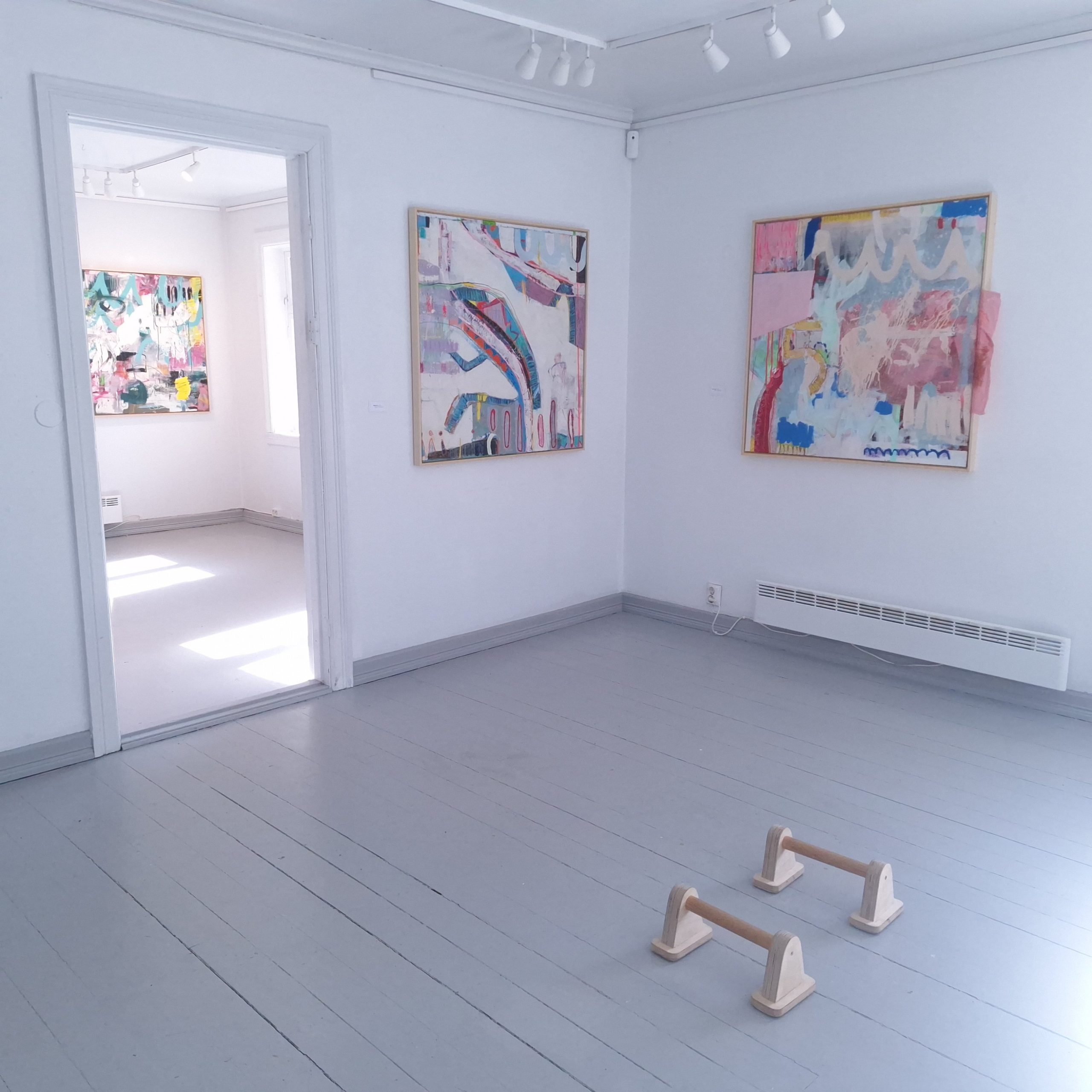
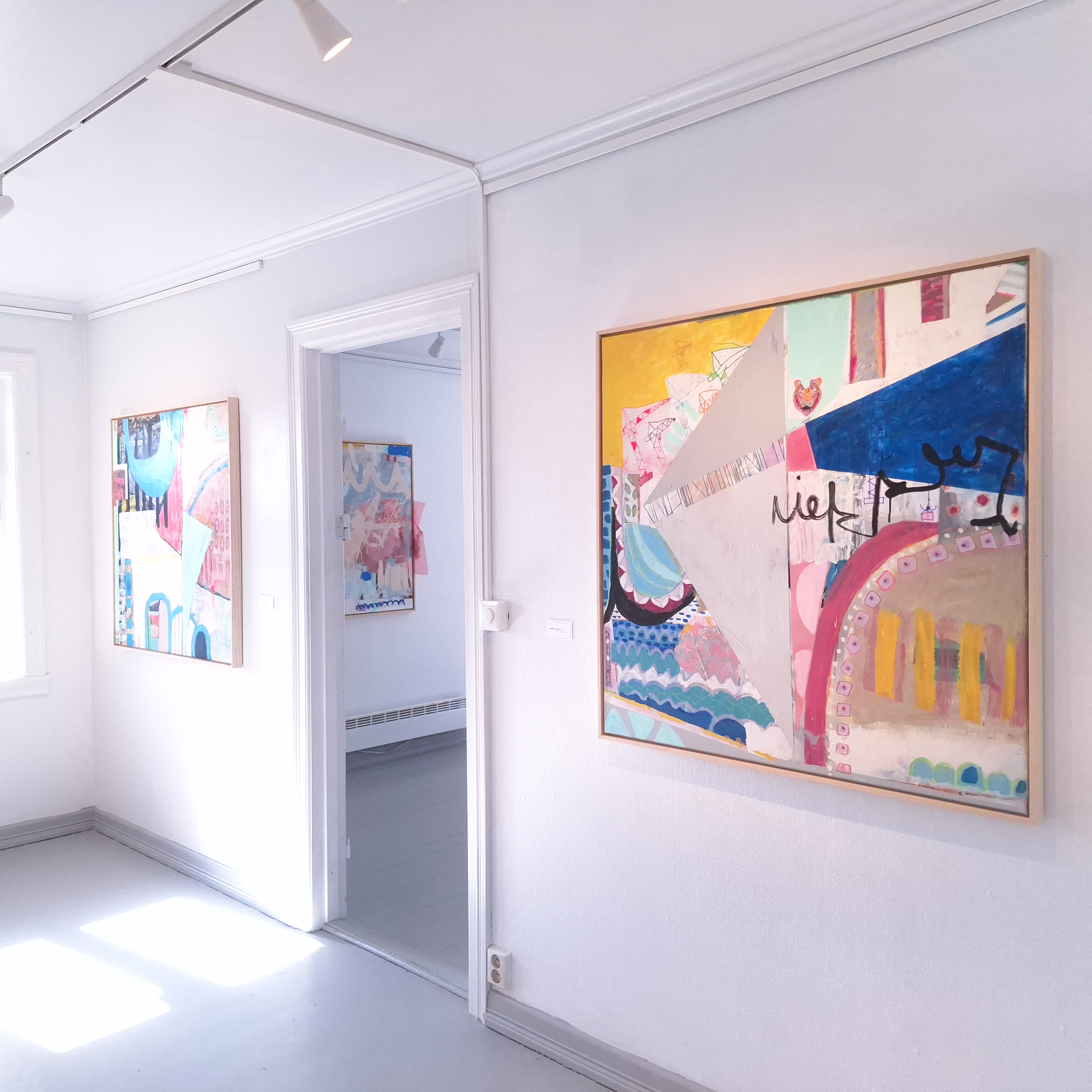
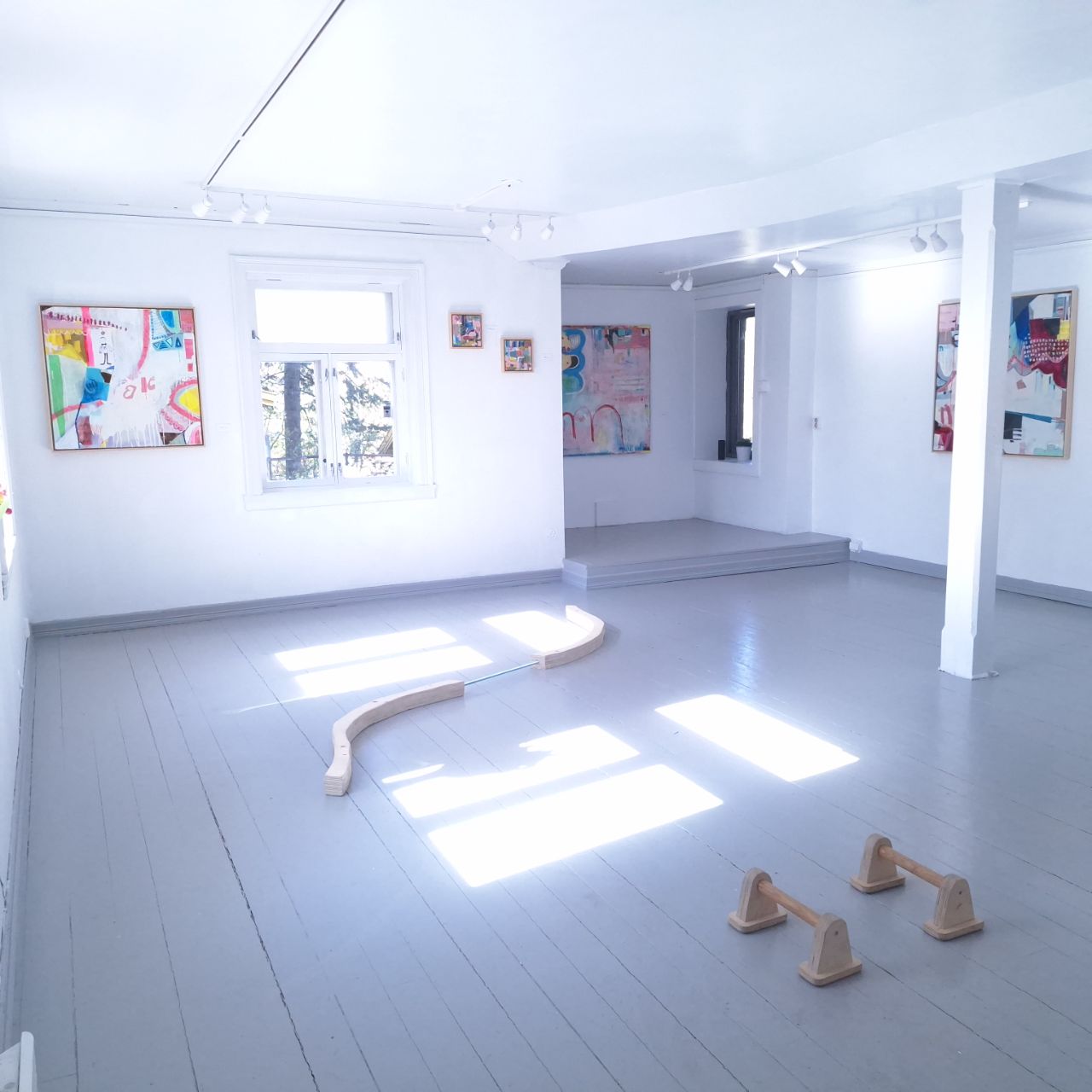
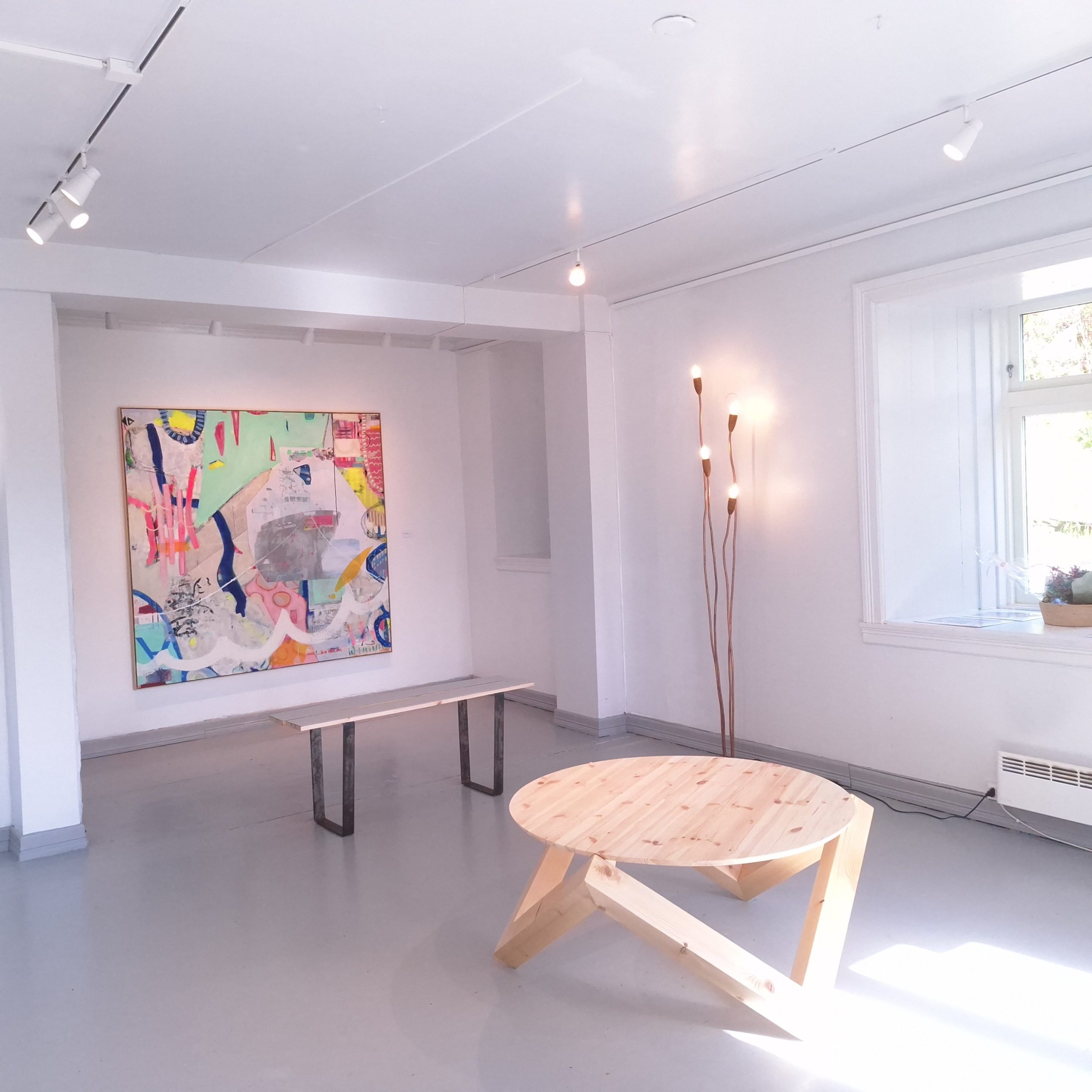
My first solo exhibition
Rsvp here
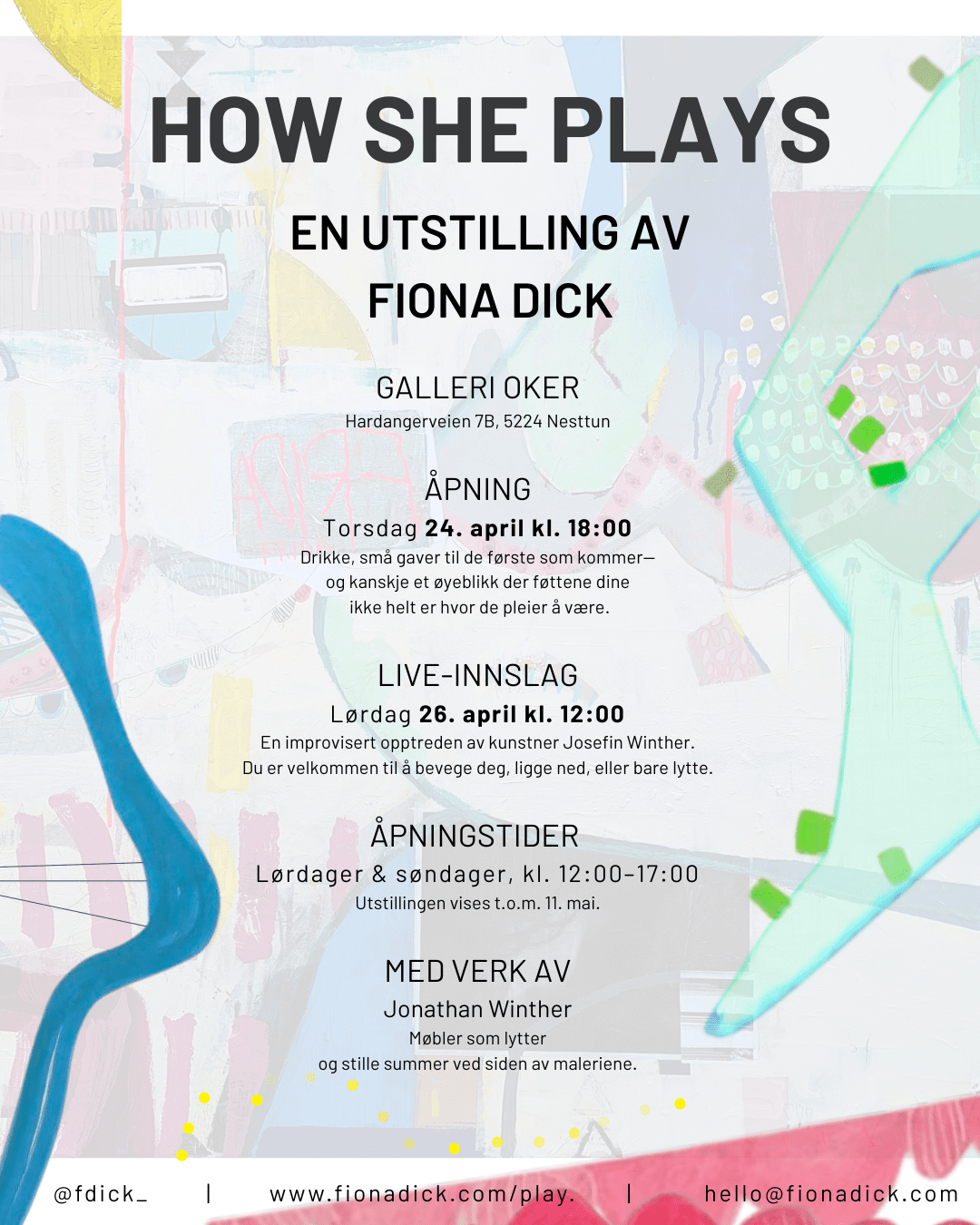
Opening 24.04 18:00 at Galleri Oker in Nesttun
Opening hours: Saturday & Sunday 12:00-17:00
Until 11th May
I’m always chasing play - it’s just part of who I am, even when circumstances or people around me make it feel harder to reach. Maybe it’s not that we stop wanting to play, but other things become louder, more urgent, more important. Playfulness isn’t often associated with femininity, yet to me, it feels completely natural - something I wish not only for myself, but for everyone around me. Because play, as Esther Perel and Rhaina Cohen suggest, is how we connect, stay flexible, and keep relationships alive.
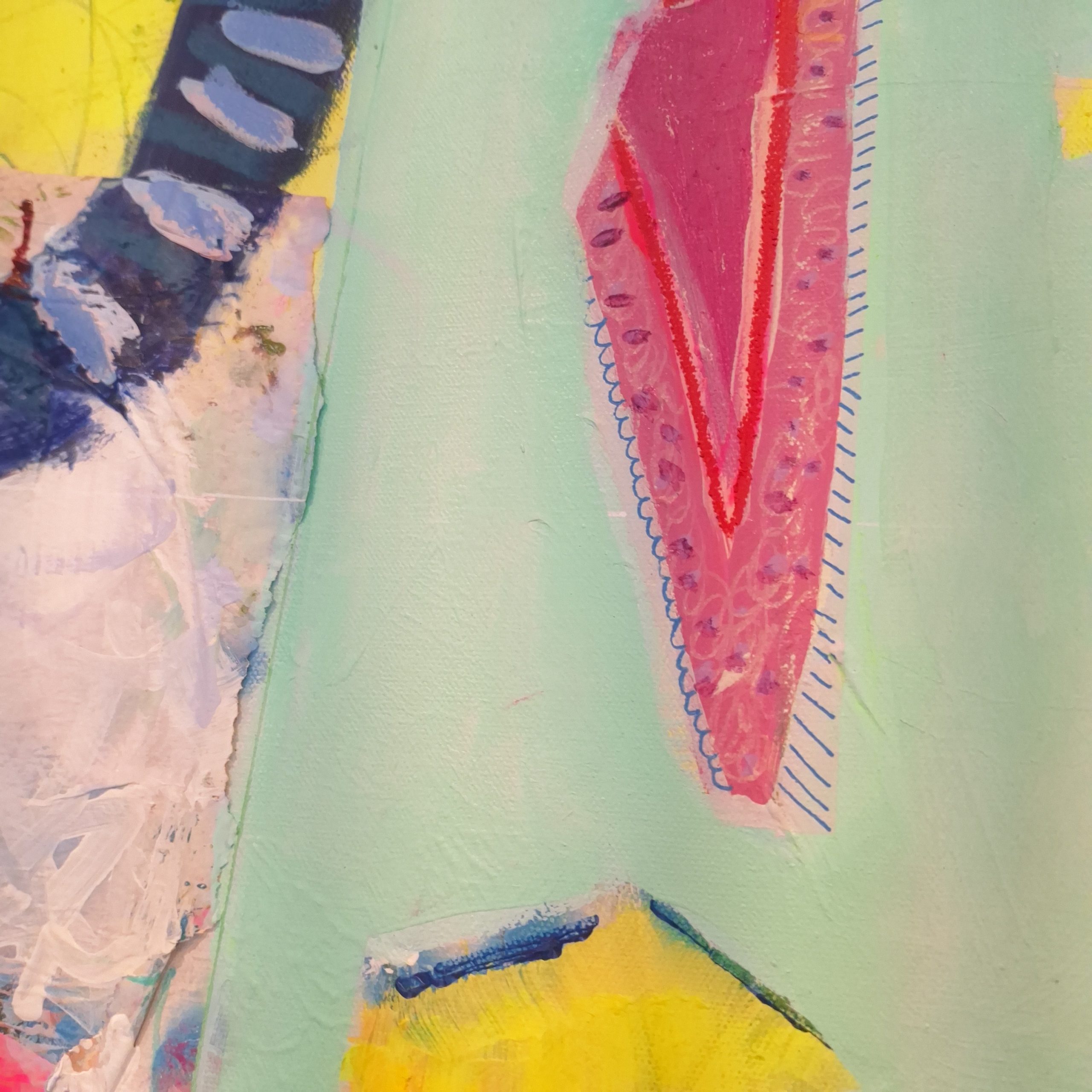
In this series, a dynamic design language unfolds through sharp contrasts - curved lines against grids, opaque blocks beside translucent washes - inviting the eye to navigate ambiguity rather than resolve it.
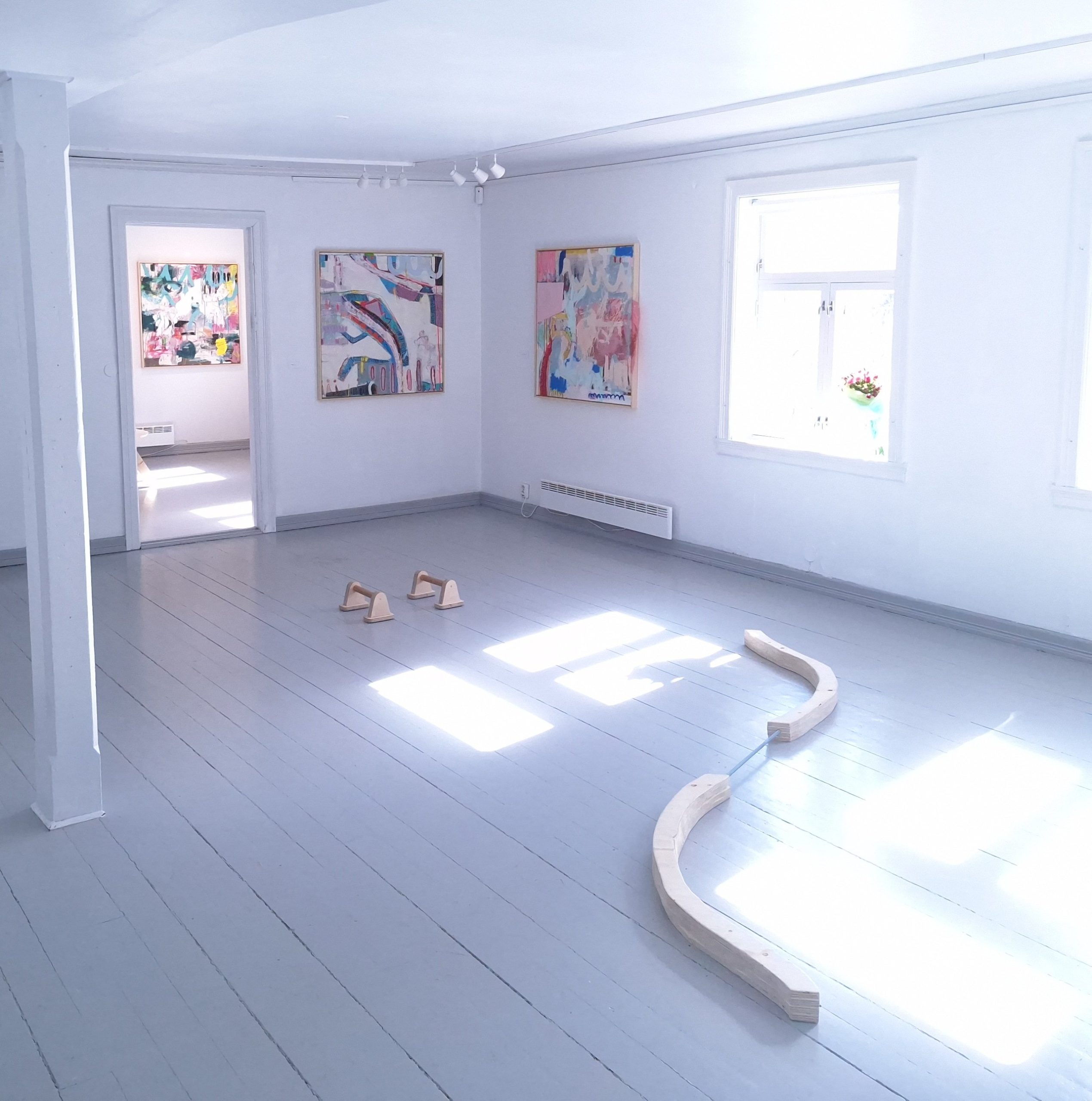
These paintings are an intuitive response: vivid colors and expressive forms that push against the quiet rules governing femininity. Not just how one should look, but how one should behave (or even be). There’s pressure to be composed, graceful, pleasing.
I don’t want to offer a new version of beauty.
I want to ask why beauty is something women owe the world at all.
I’m drawn to play because it isn’t about approval. It’s self-directed, impulsive, and doesn’t care how it’s received. Each painting evolves slowly, through many layers over time - but the act of painting itself is quick, spontaneous, and intuitive. When I paint, I want to do exactly what I feel in that moment. Even mixing paint can feel like it interrupts the urgency of the gesture. It’s impatient in the best sense - a quiet resistance to being careful or composed.
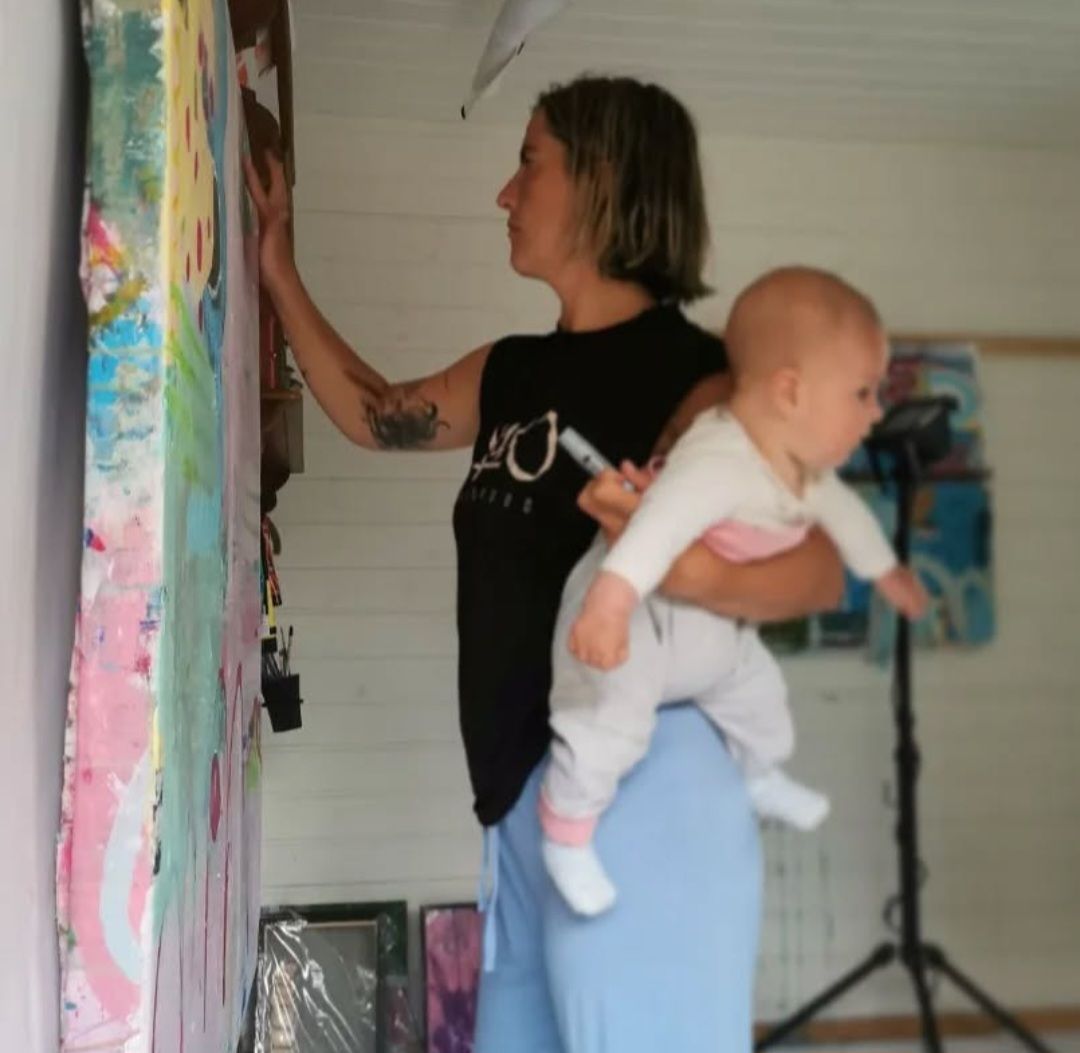
That way of working doesn’t exist in a vacuum. I’m often drawn to artists who follow a similar thread - who trust instinct and let colour carry meaning.
I get inspired by looking at painters like Petra Schott, Pamela Caughey, and Jessie Woodward - and their work just makes me happy. There’s something in Schott’s emotional depth, in Caughey’s layering and exploration - both of herself and of art-making - and the way she puts that directly into the work. Woodward’s pieces feel raw and alive, full of rhythm and intuition. I can’t always explain why this kind of work speaks to me, but it does.
This exhibition offers a space to pause the practical and reawaken something instinctive. A chance to step into colour, loosen the grip, and remember how it feels to be playful without purpose.
Esther Perel speaks of play as a way adults stay emotionally alive - not just in romance, but in friendship, in selfhood. Cas Holman, in her work as a designer, builds tools that invite children into open-ended play - play without goals, without performance. Her approach inspires me not just as an artist, but as a person. It reminds me that creative freedom isn’t something we grow out of - it’s something we’re often taught to suppress.
Especially, I think, if we’re women.
Take the idea of “me-time” - just one example among many. For women, it’s often framed as recovery or maintenance: a way to catch up, reset, get back to being composed. For men - at least culturally, in general terms - free time is more often about play. Football, gaming, bikes, music. Activities that are physical, absorbing, expressive. It’s a small difference, but it says a lot about where we’re taught to seek joy - and where we’re not.
Maybe it’s not that we’ve lost the ability to play - but that we’ve been trained out of trusting it.
Maybe it’s time to expect it back.
I’m glad I never stopped playing - that it stayed with me, instinctively, even when it had no audience. But what feels new is this: having a forum to express it openly. To share it, confidently. I stand behind this work without the slightest shame. What I do is joyful, intuitive, and deeply personal - and I recognize it as important and serious.